Żoliborz
WARSZAWA 2026
Photo
Oni studio
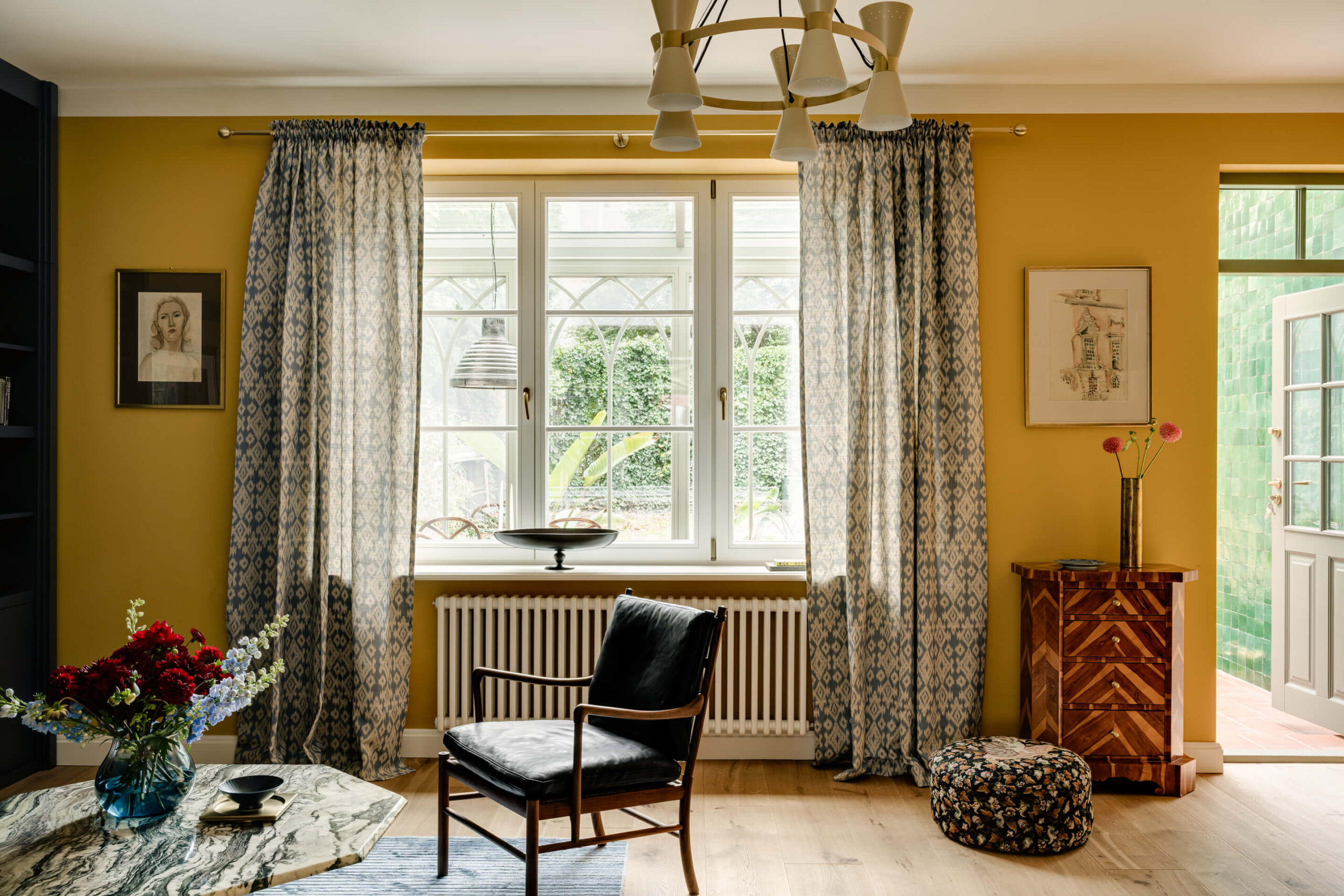
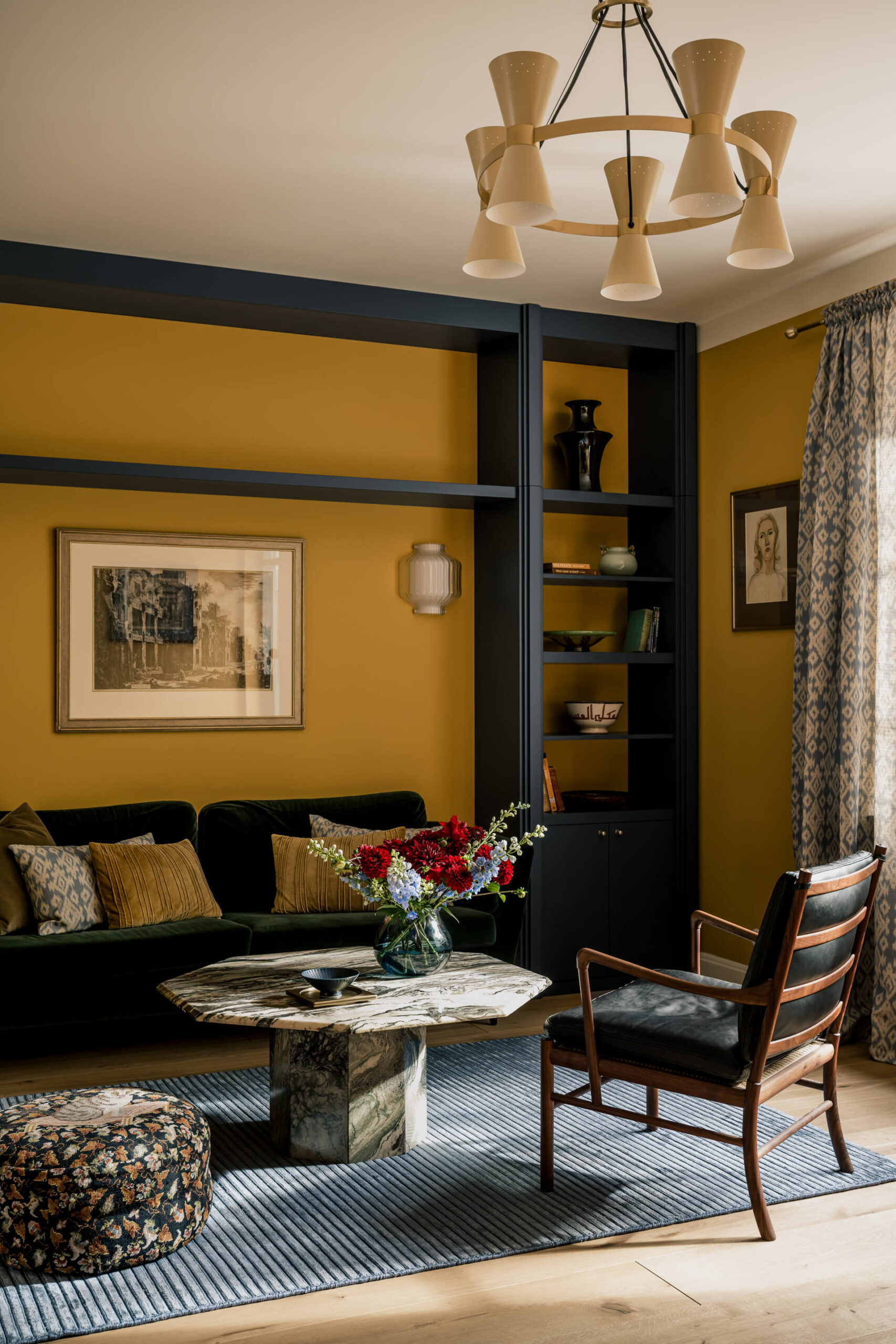
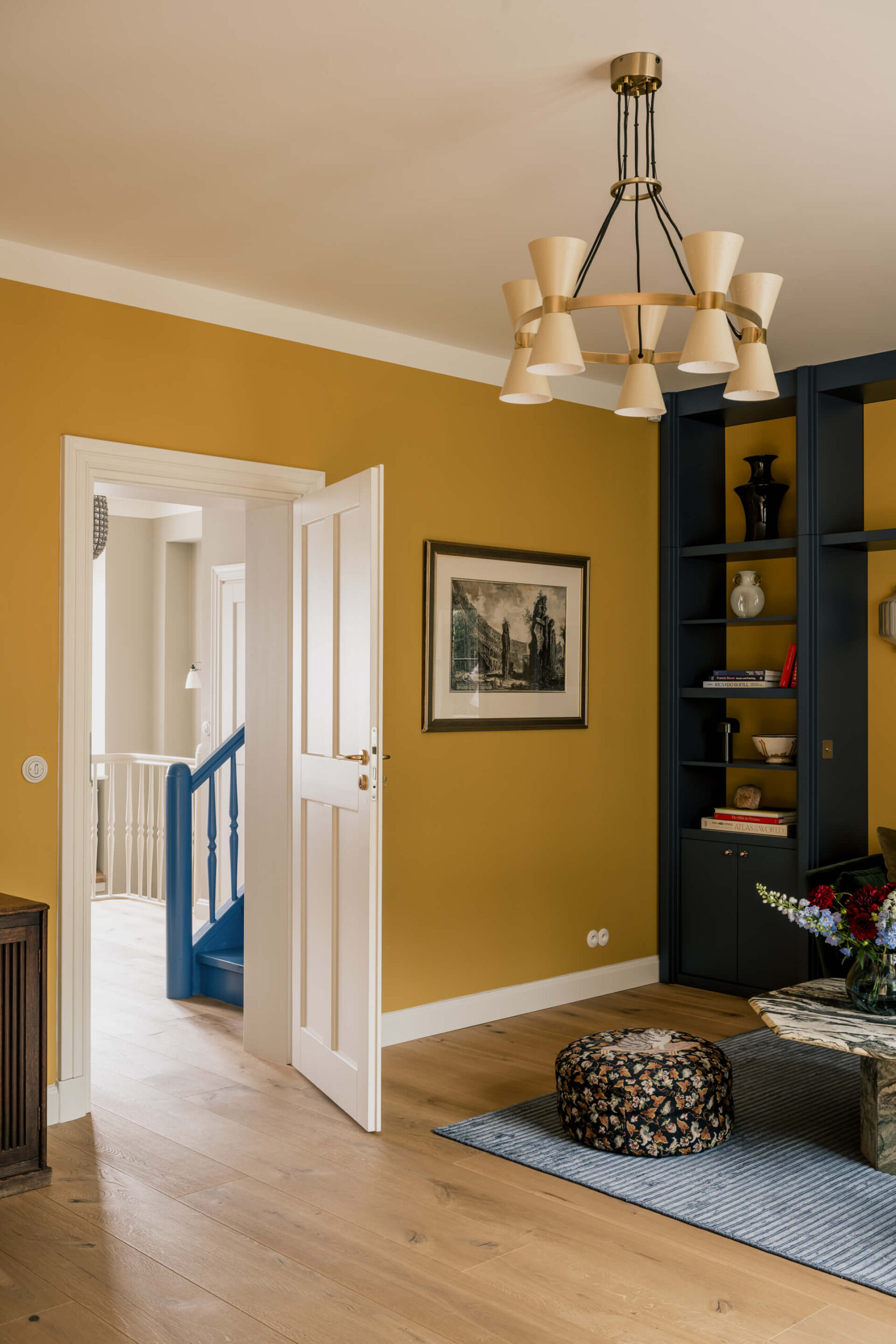
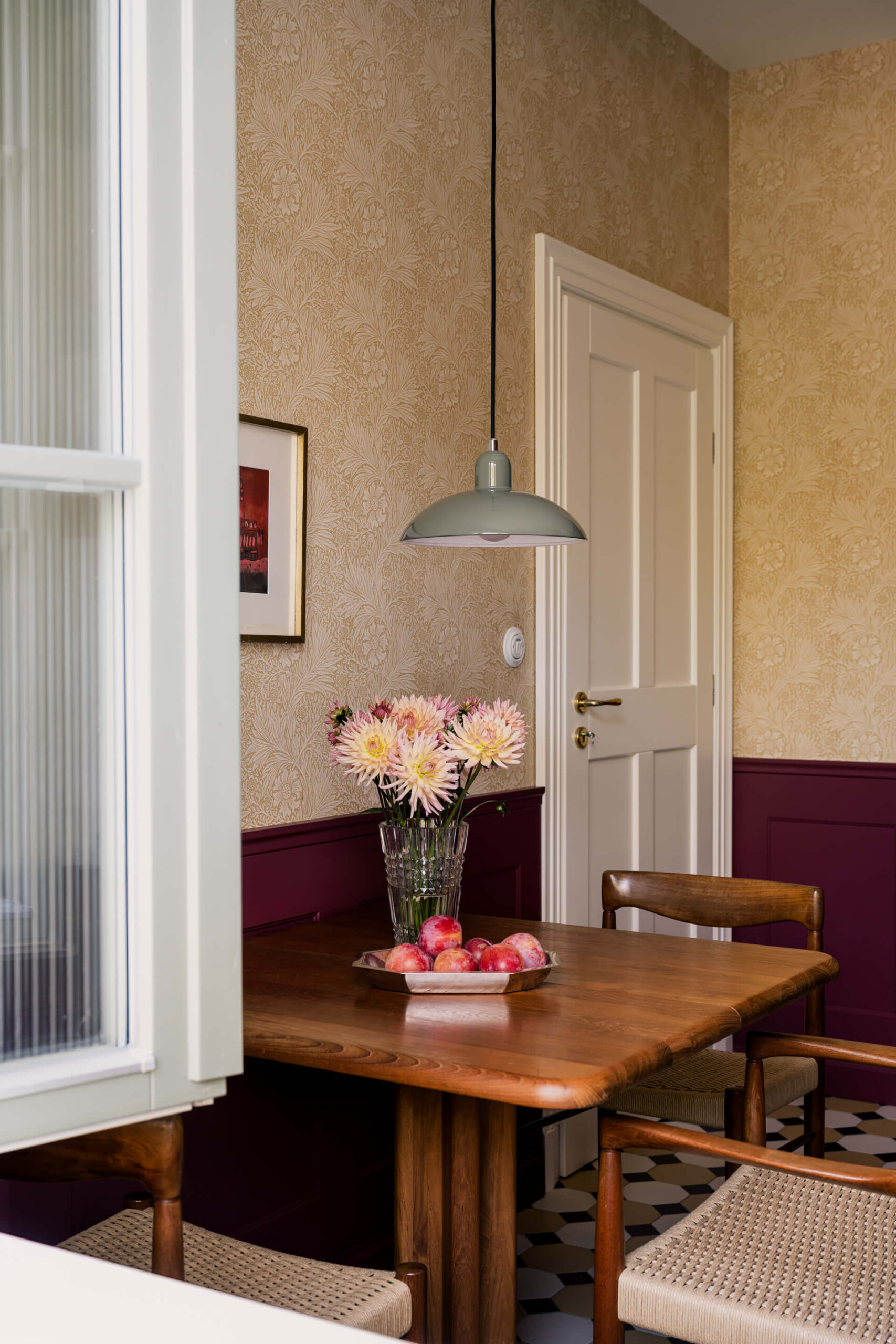
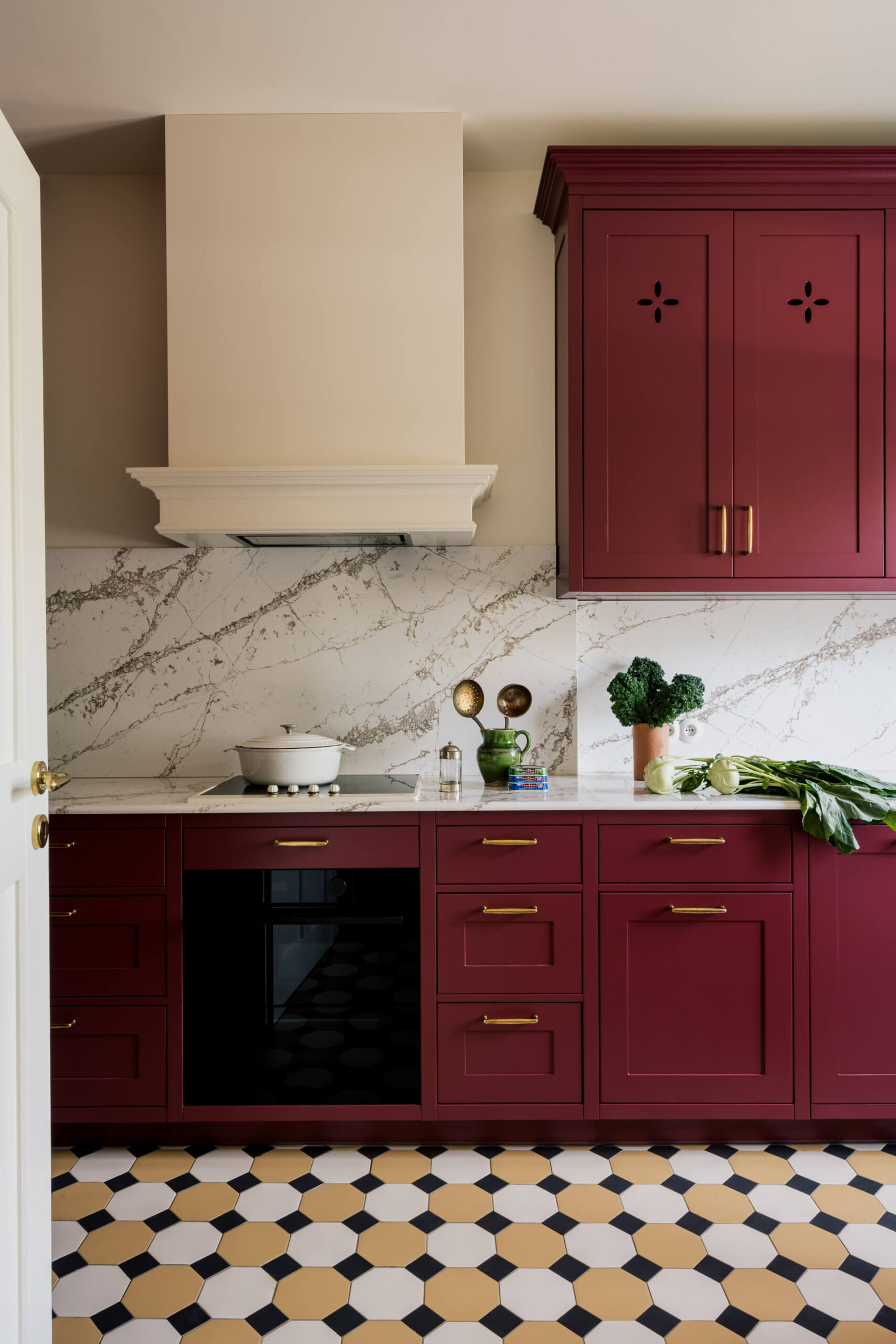
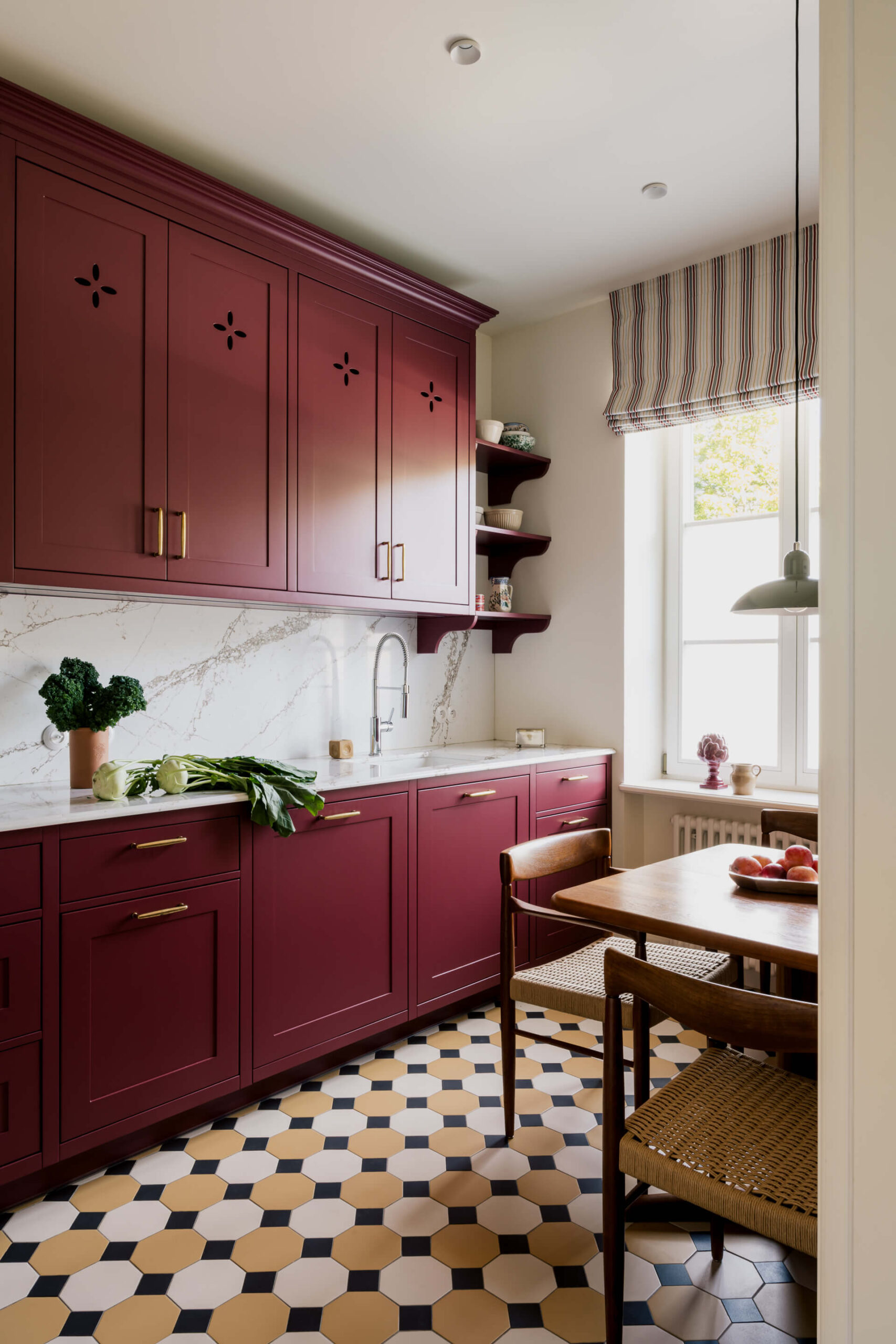
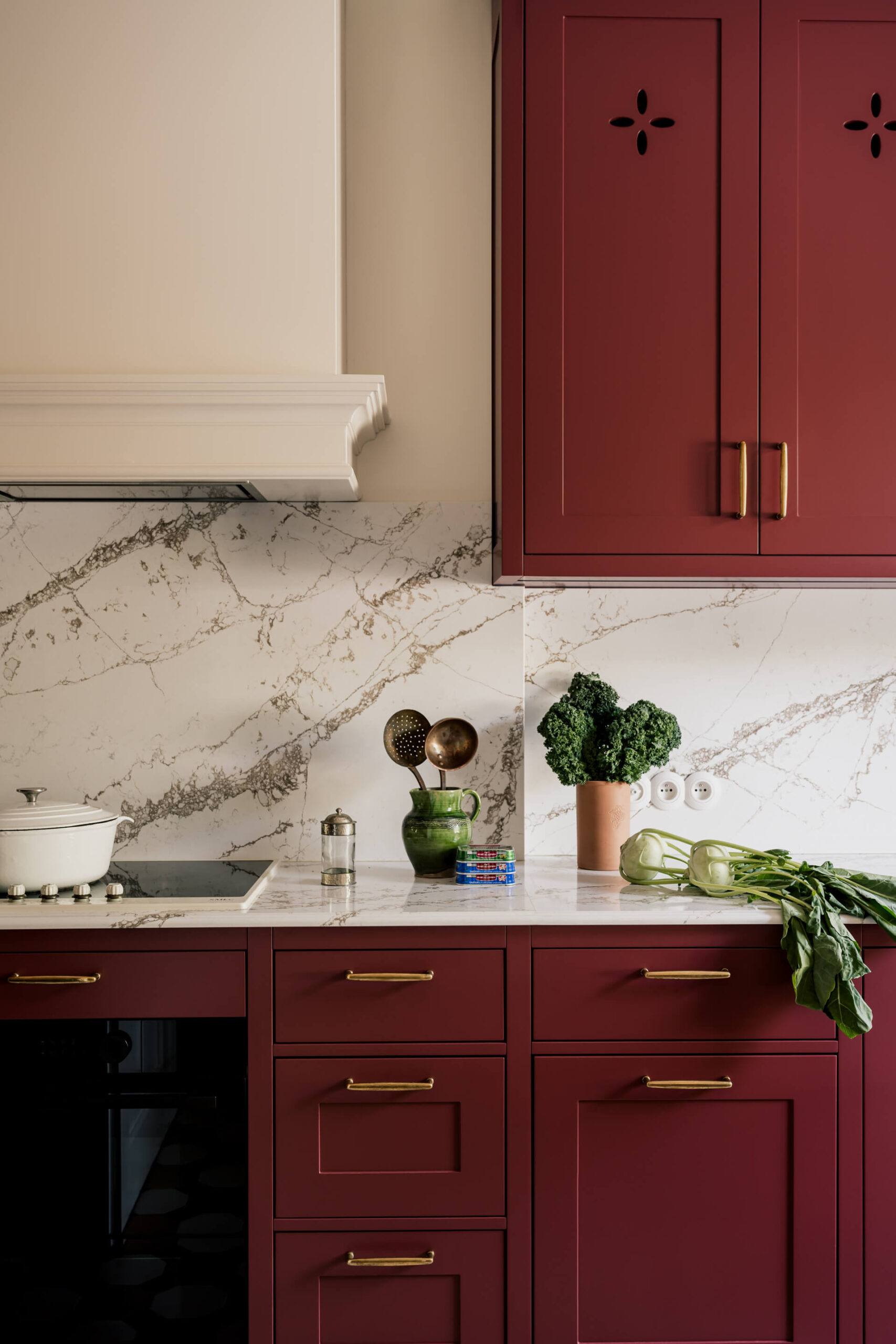
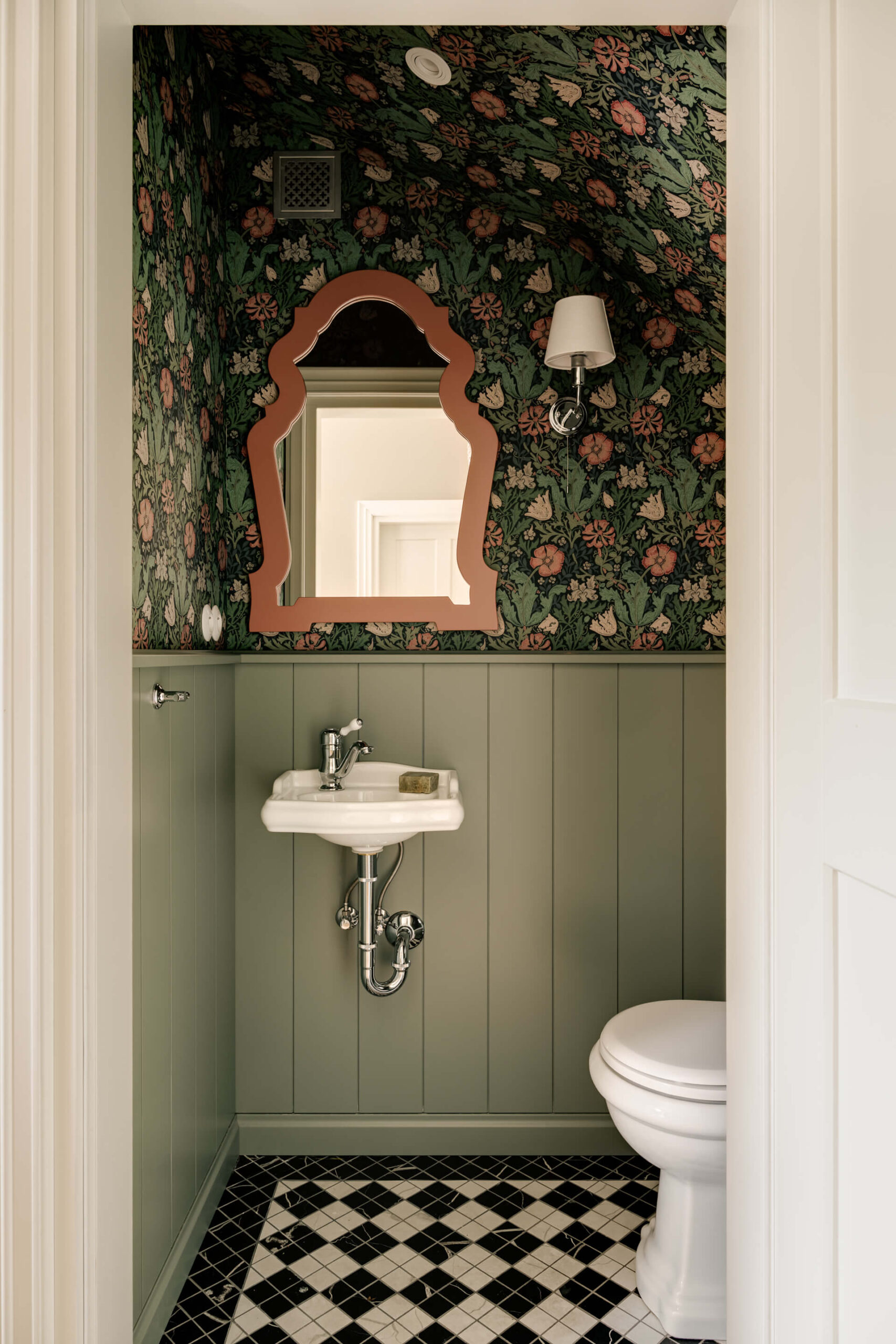
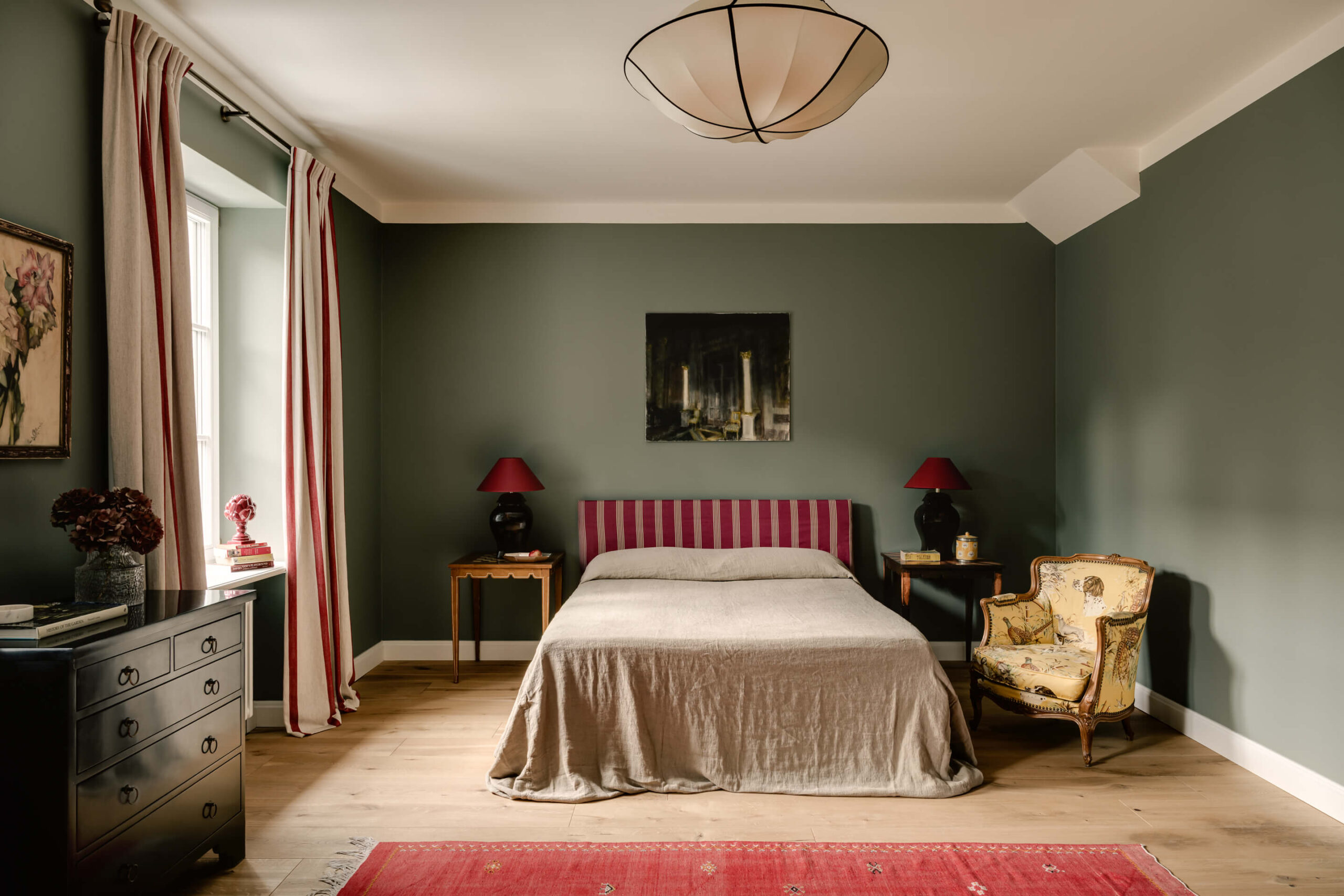
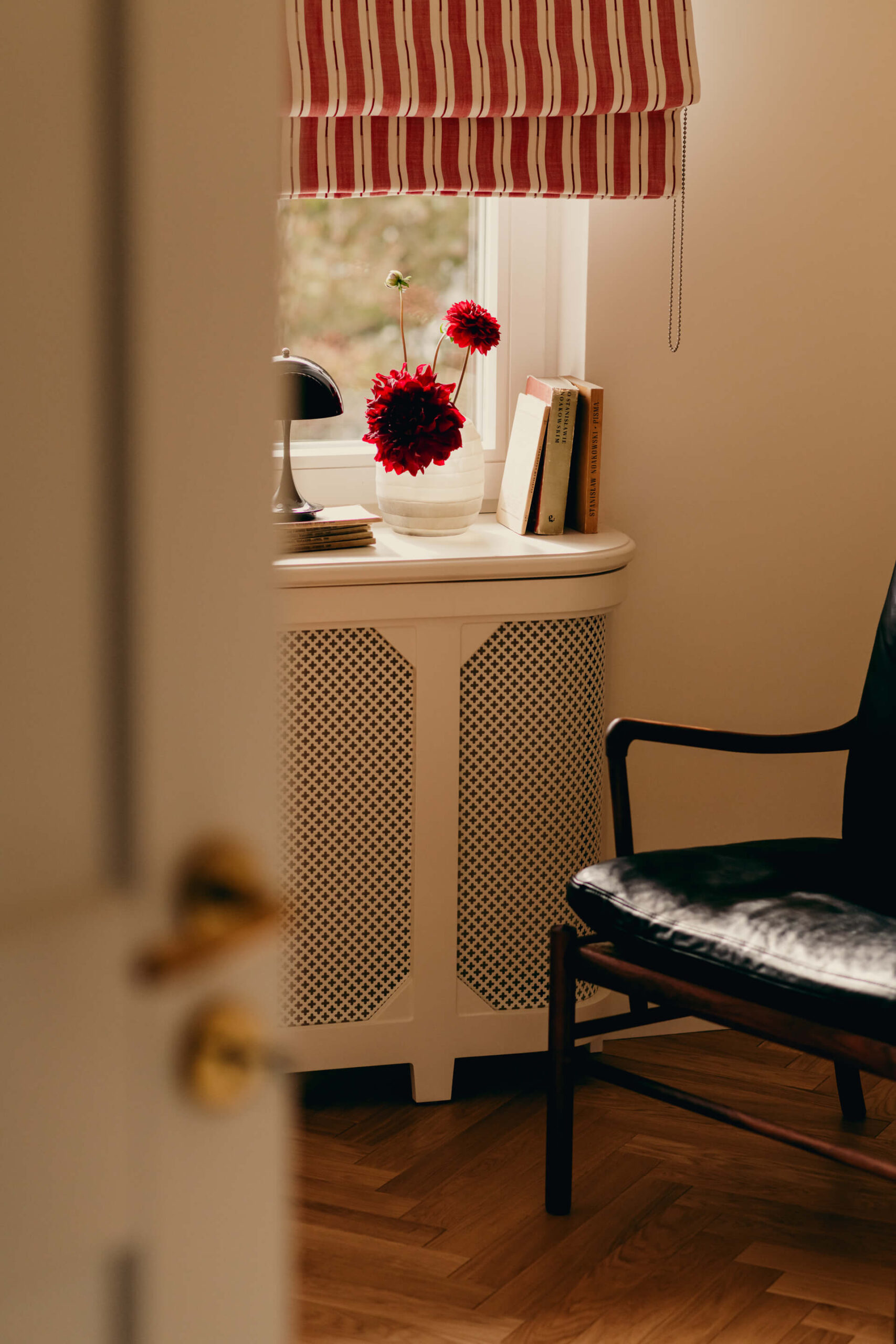
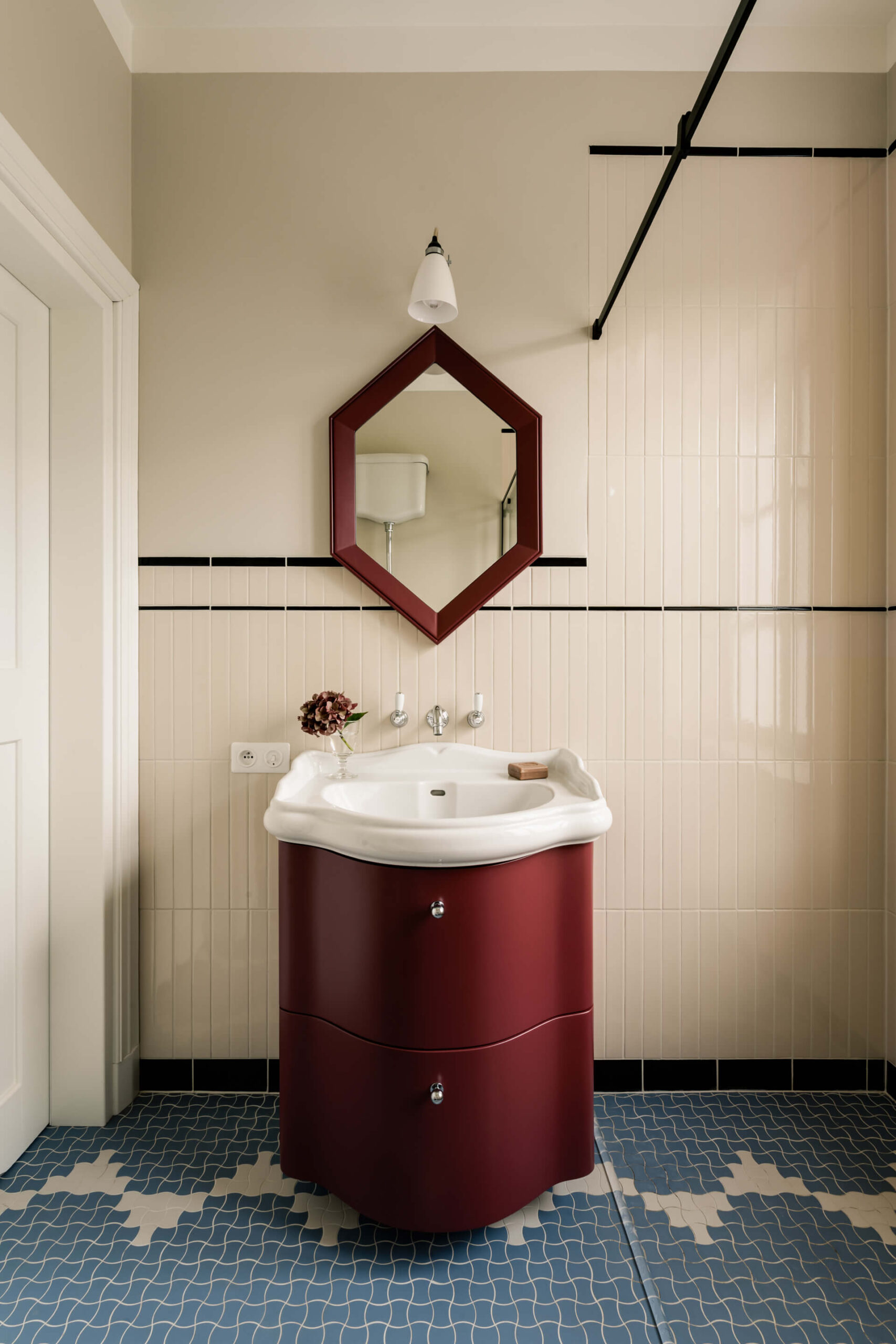
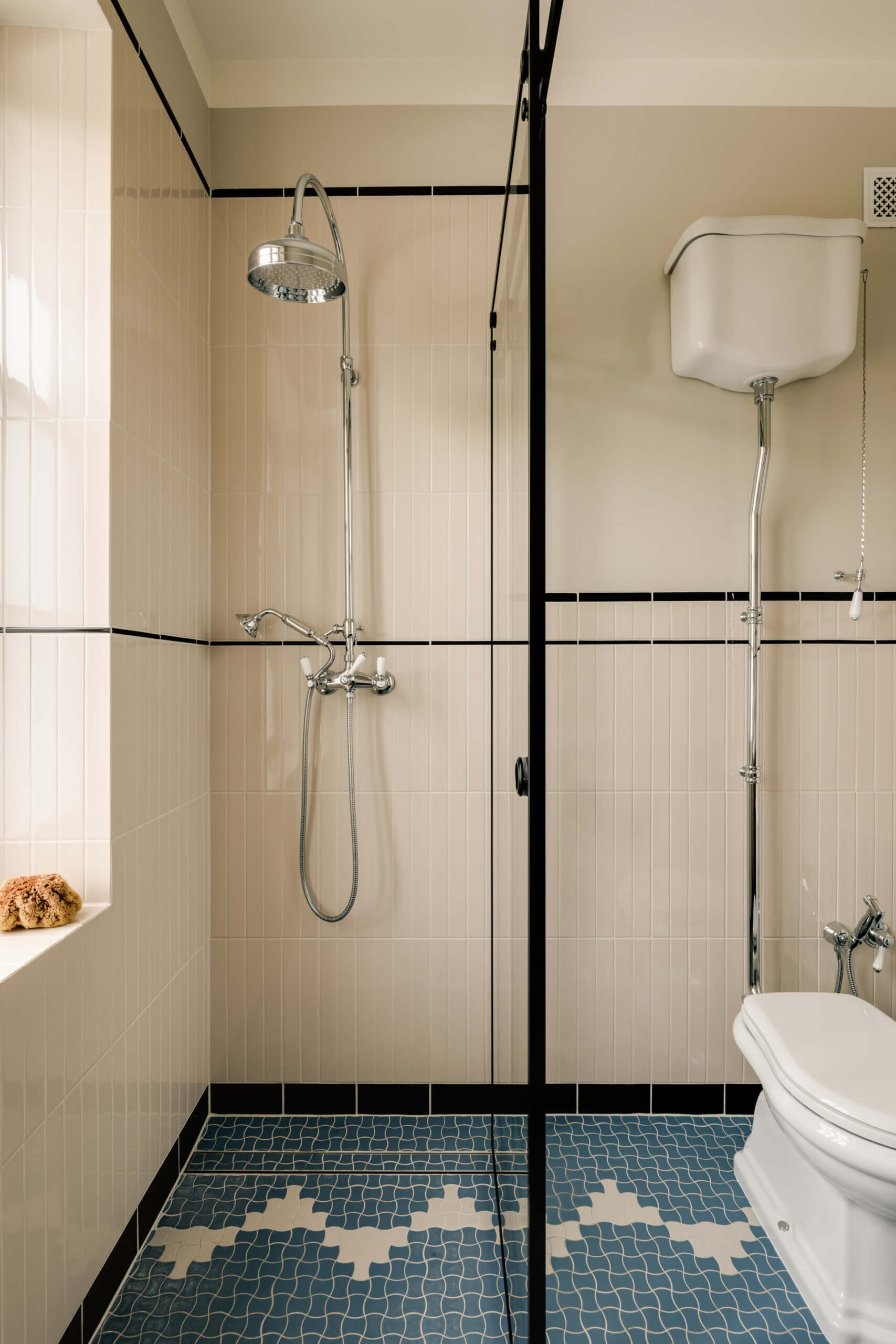
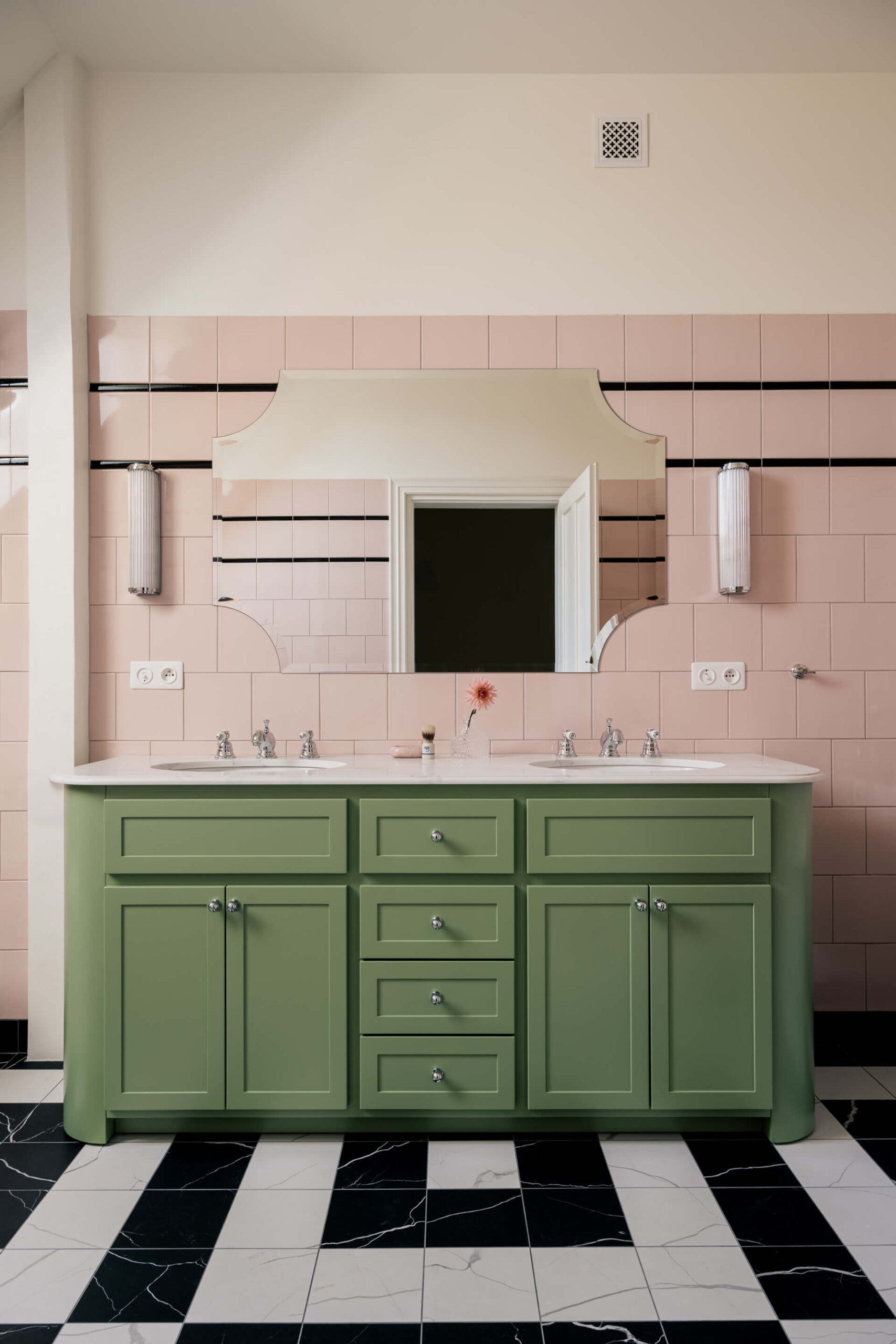
The house design draws inspiration from English interiors, where classical elegance meets the distinctive character of Warsaw. Each room, defined by its own unique color palette, tells a separate story, yet all spaces seamlessly interact to form a cohesive and harmonious whole.
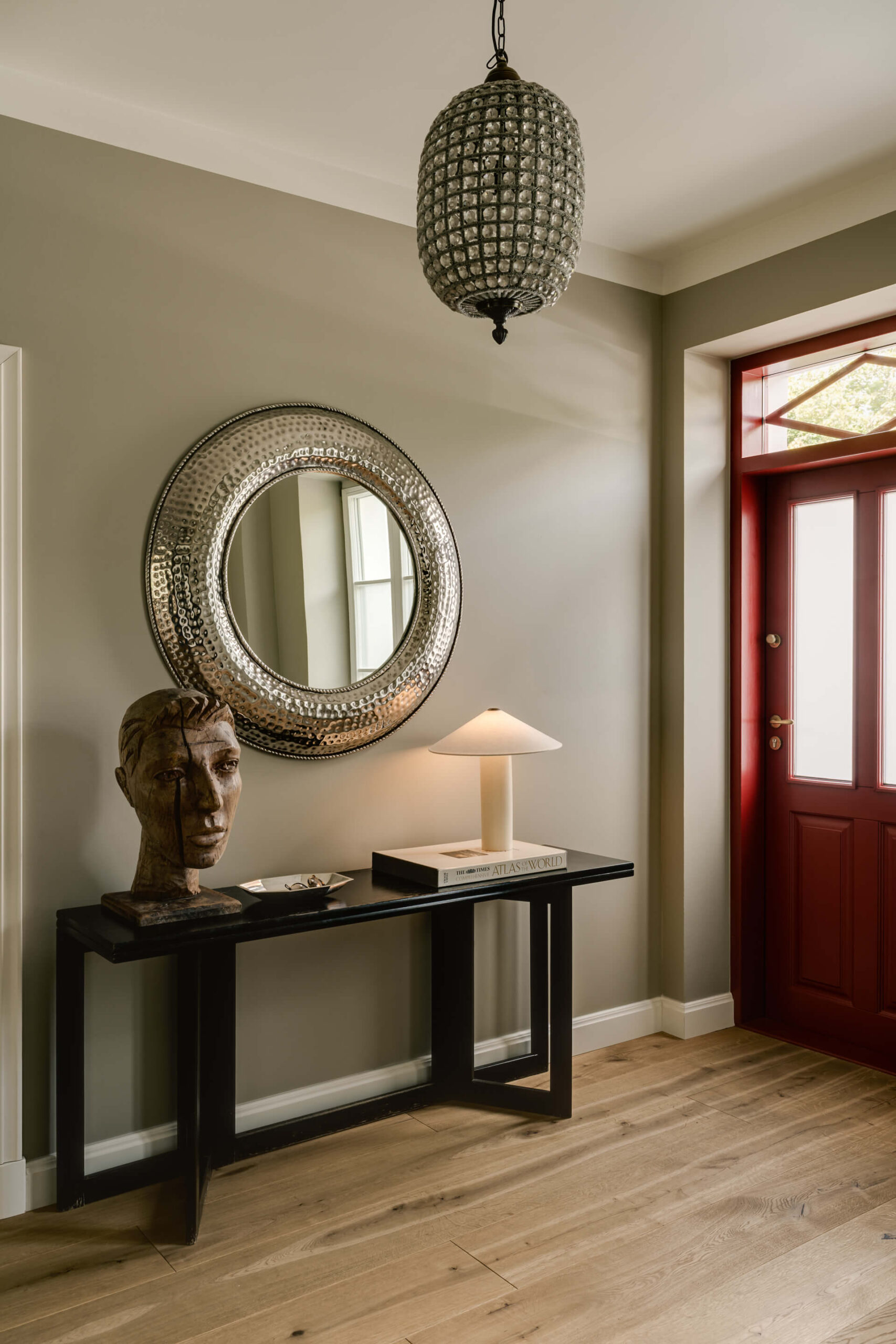
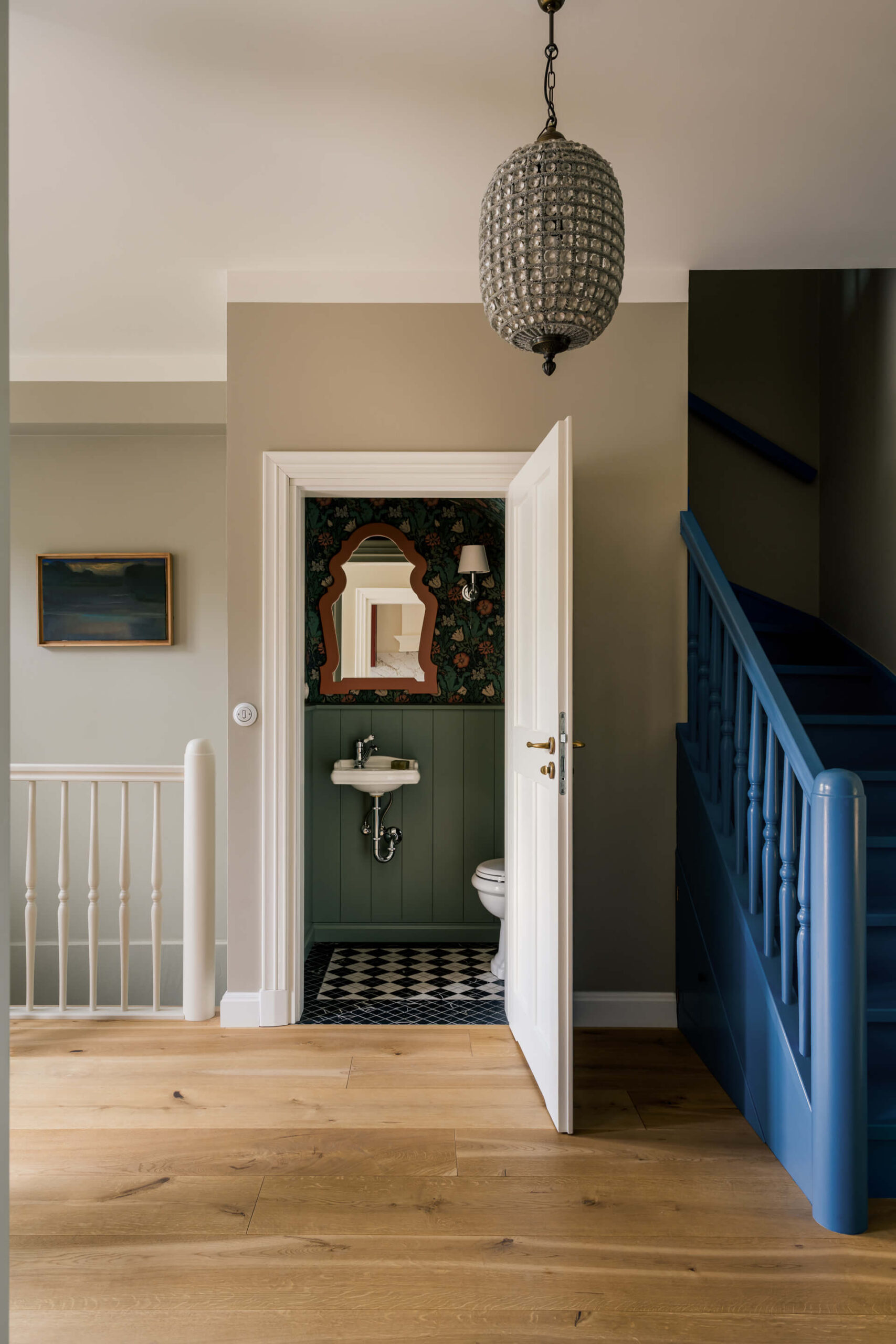
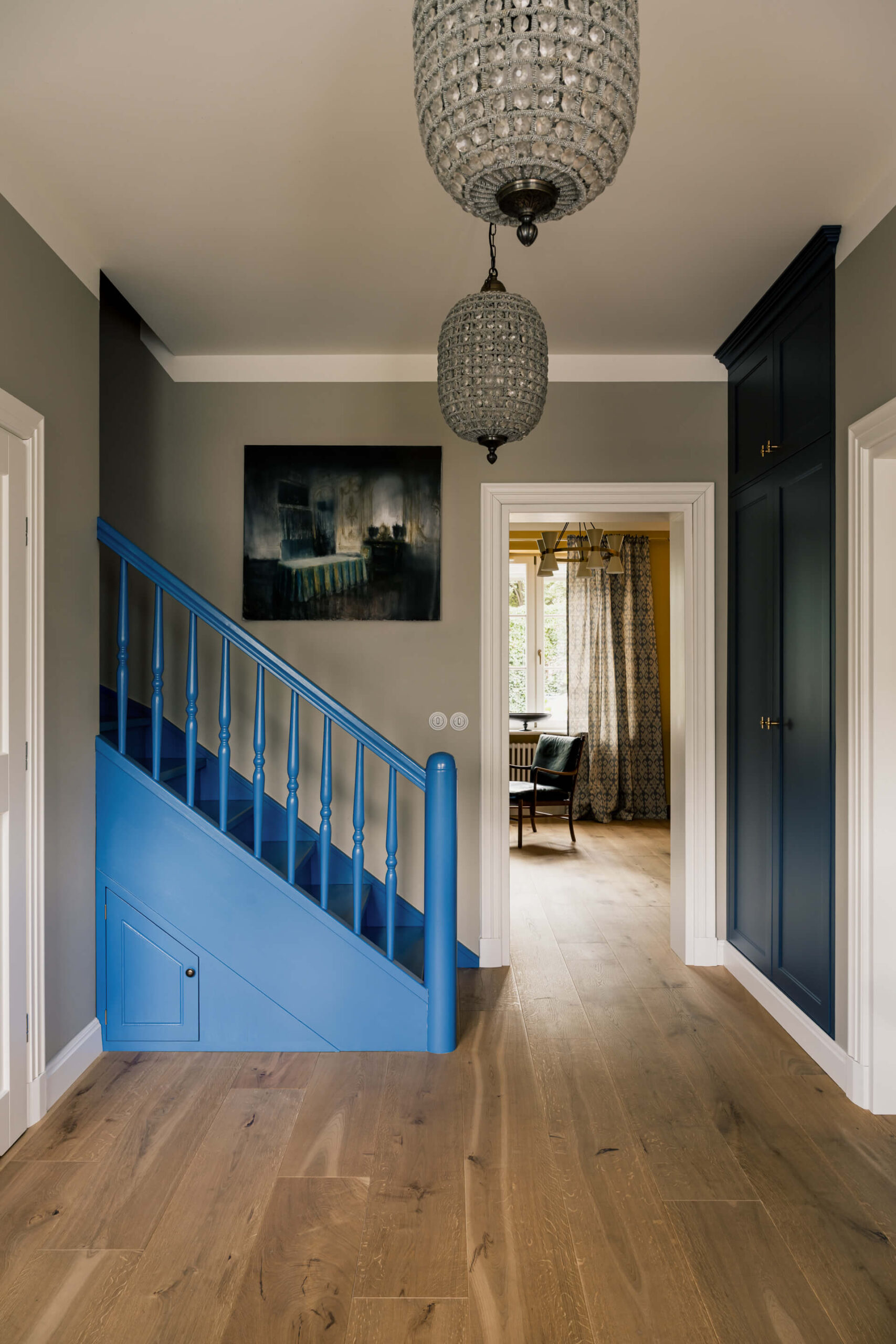
In this Żoliborz home, richly patterned wallpapers and layered textiles play a key role. A soft, subdued tone in the entrance area contrasts with a bold blue staircase — an energizing feature that immediately captures attention and sets the tone for the interior.
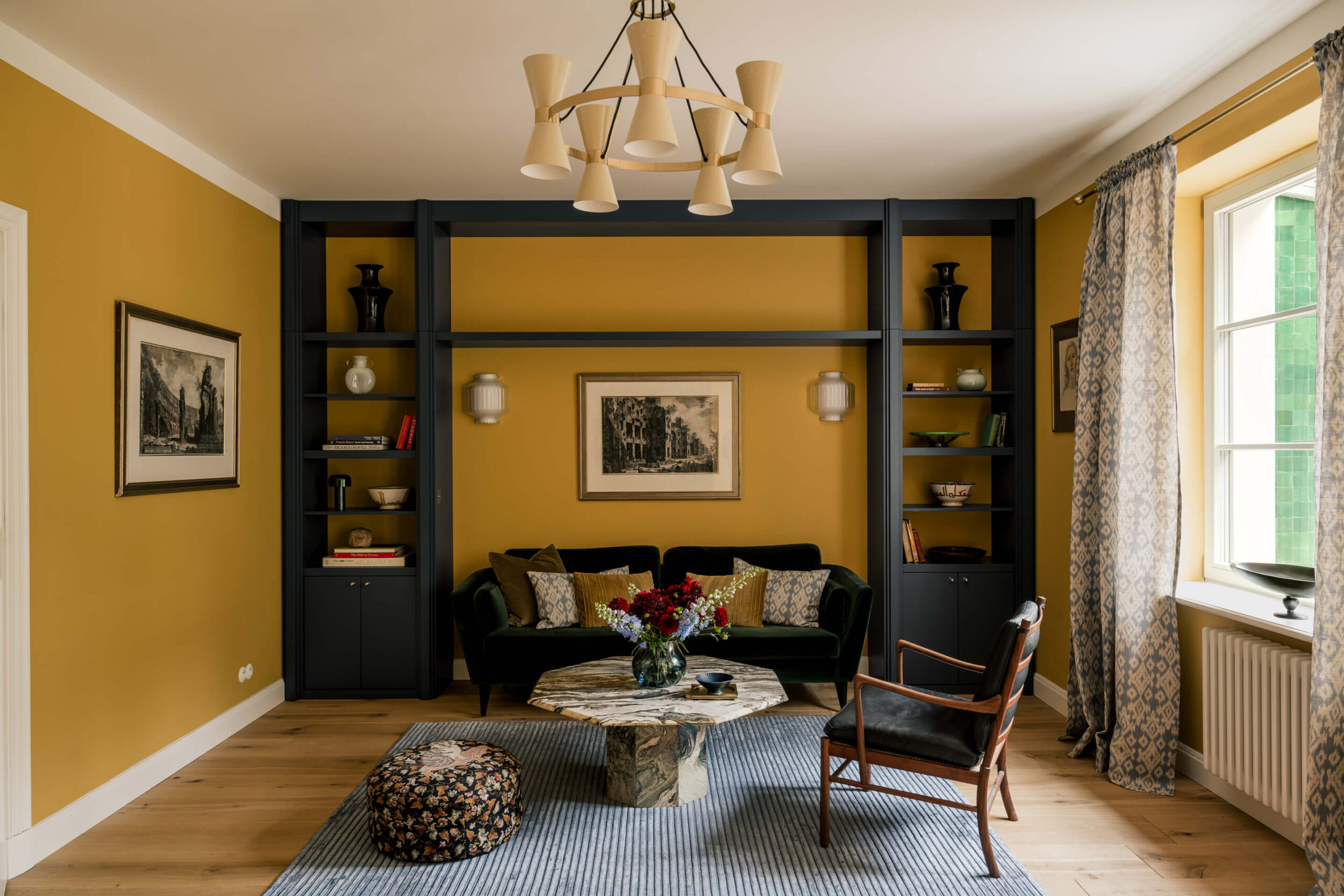
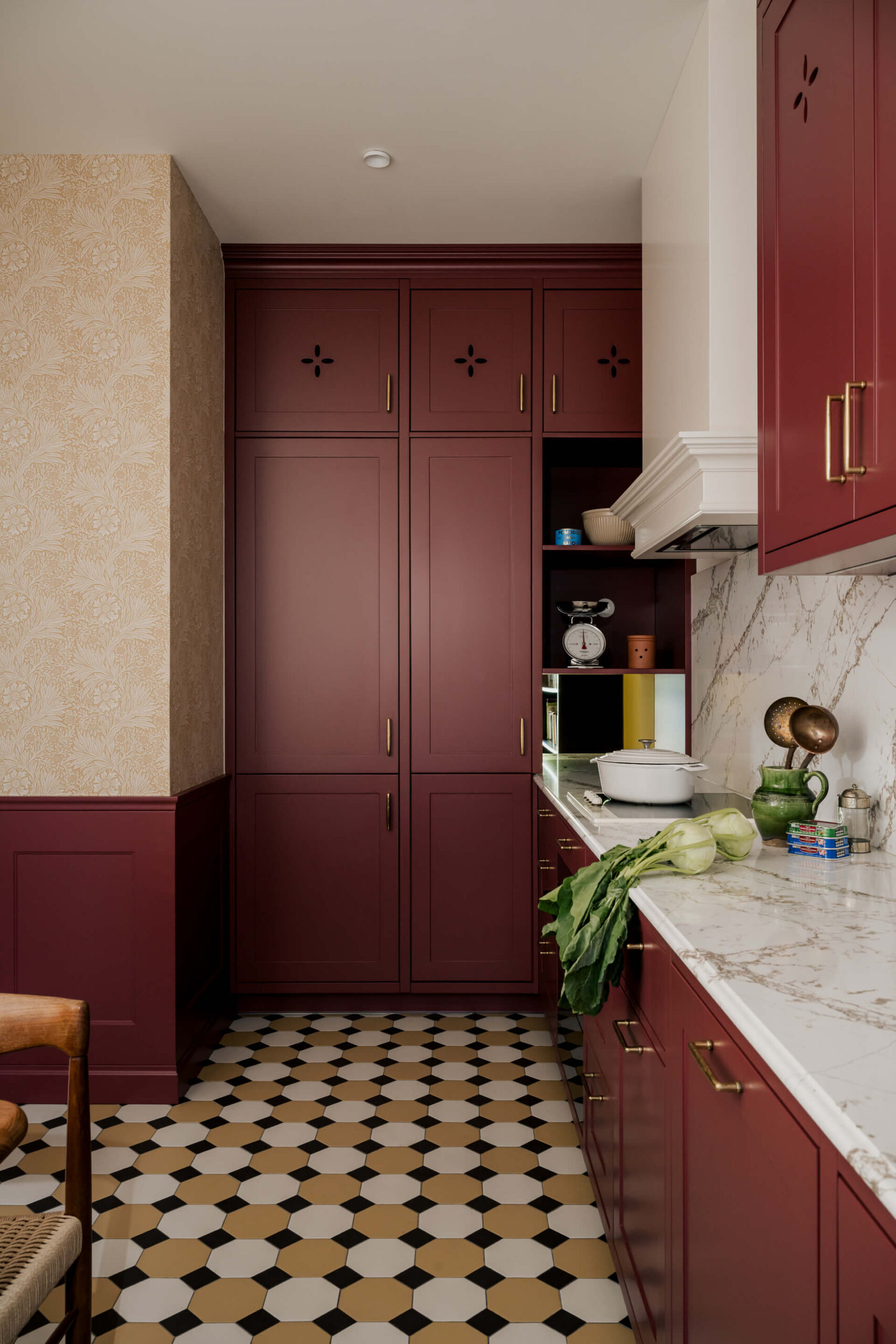
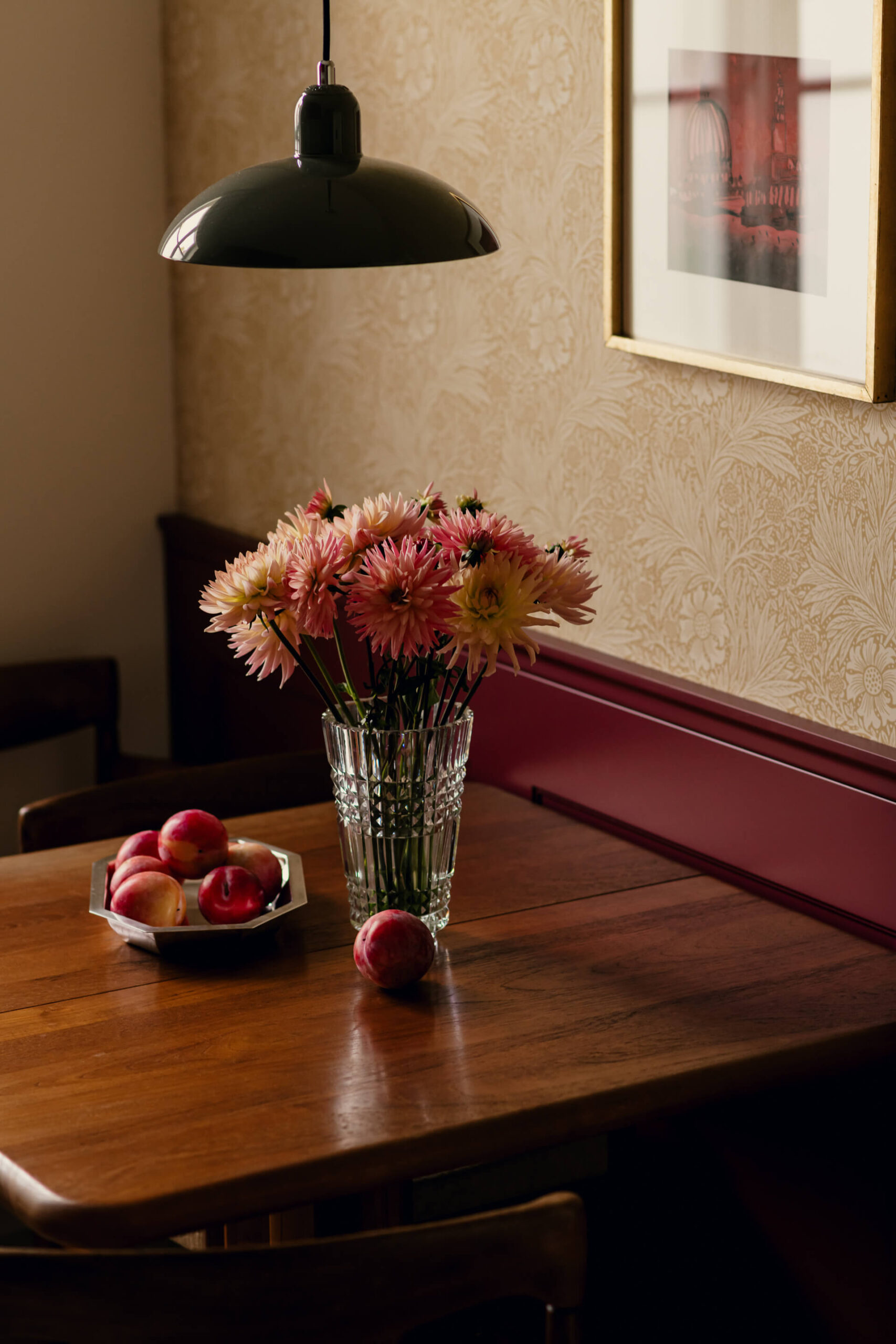
The kitchen is designed in a deep burgundy shade, paired with yellow William Morris wallpaper in a warm curry hue. The living room features a vibrant, Indian yellow, balanced with muted dark navy and complemented by blue accents, creating a dynamic yet refined composition.
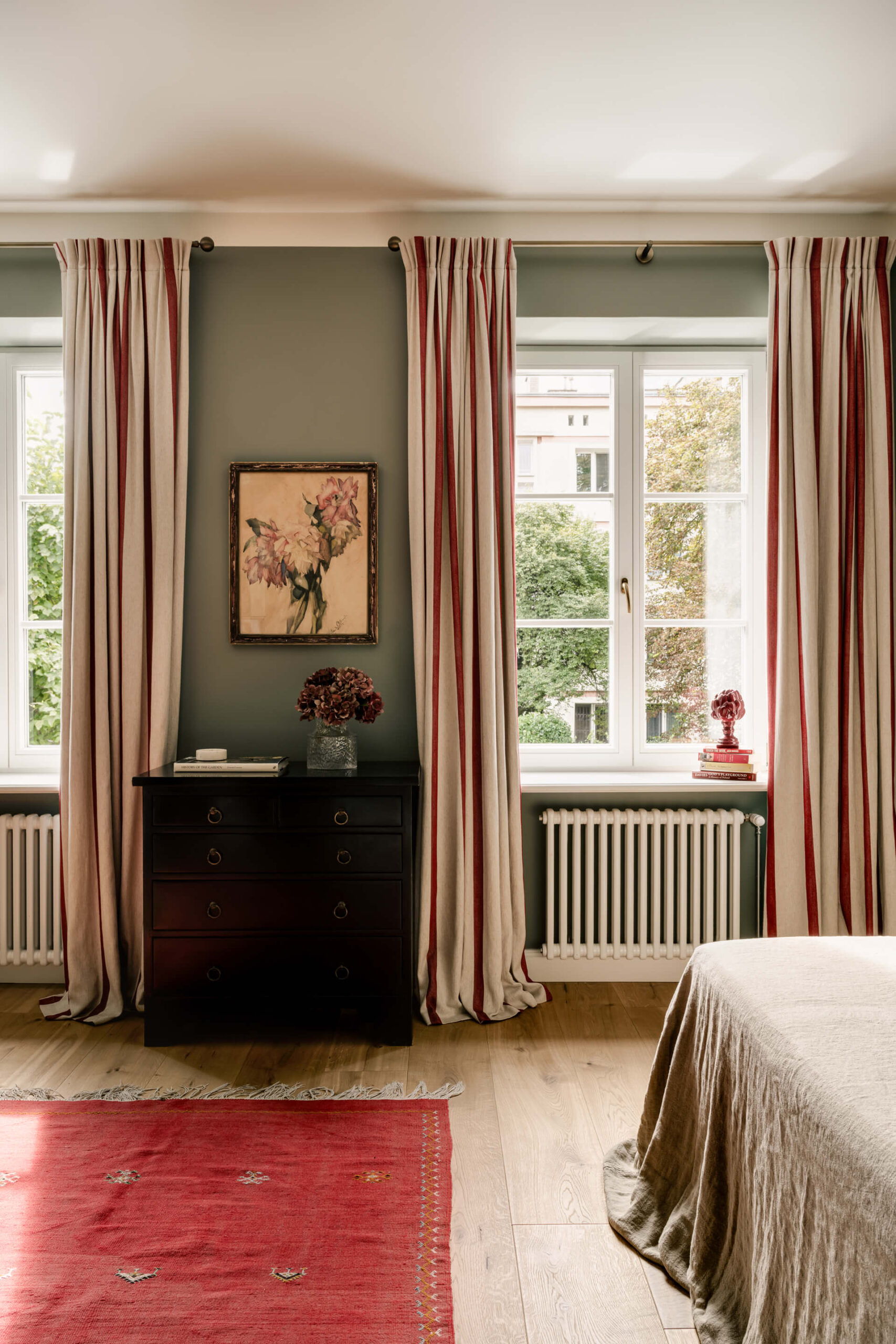
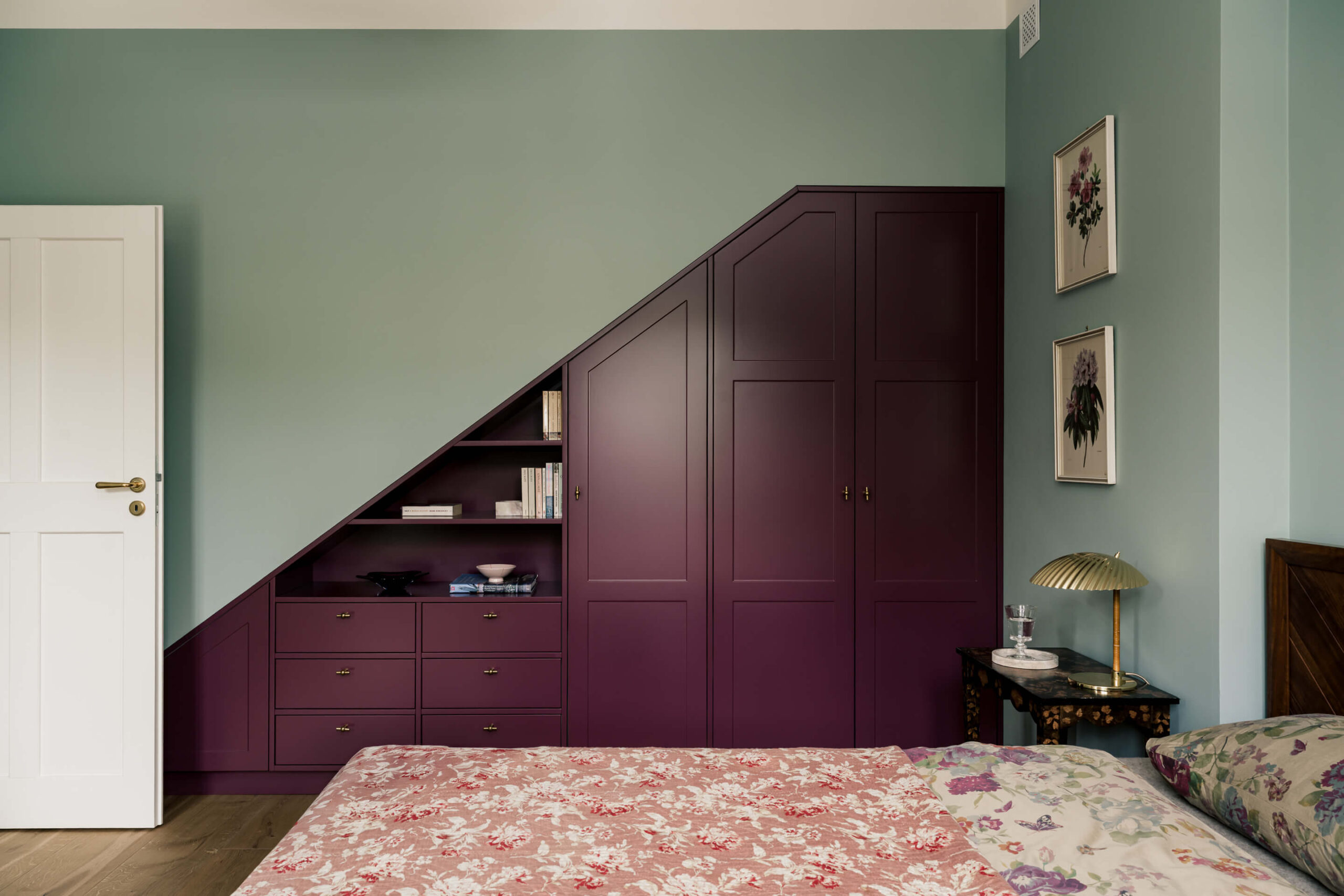
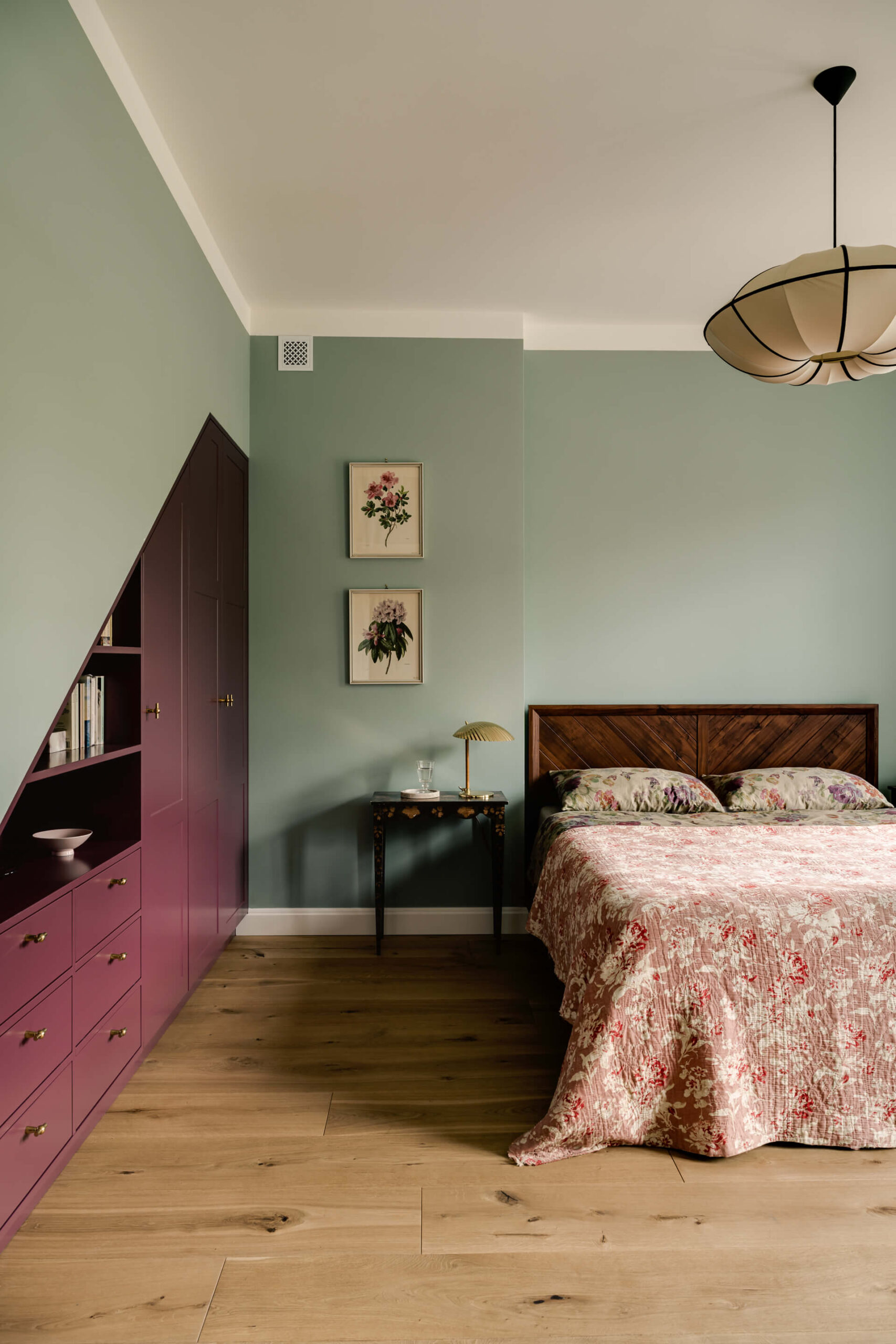
The first-floor bedroom is a harmonious blend of two tones: a burgundy with violet undertones and a deep, muted blue with a hint of green. The space is completed with patterned fabrics featuring floral motifs, used both in the window treatments and on the bed.



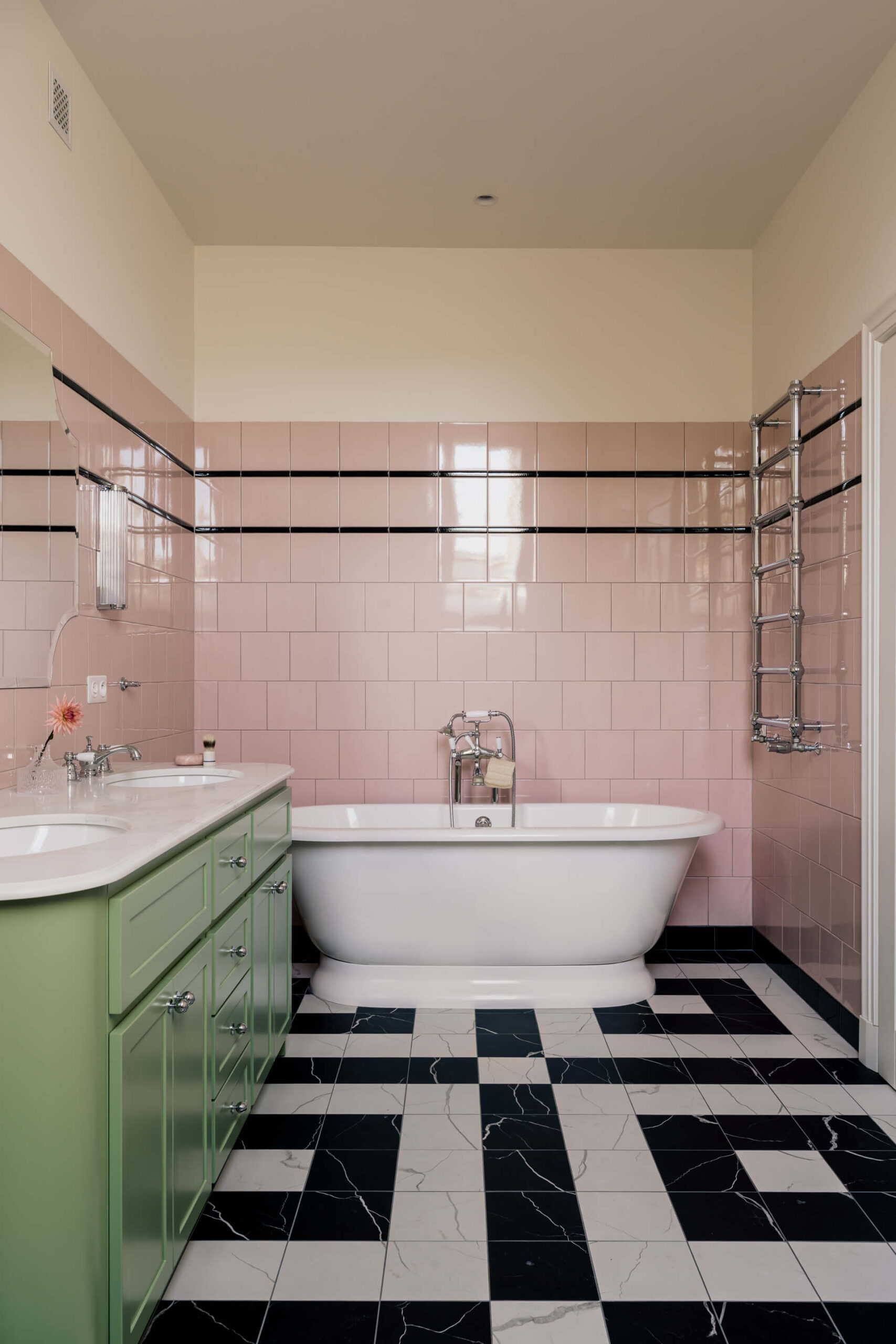
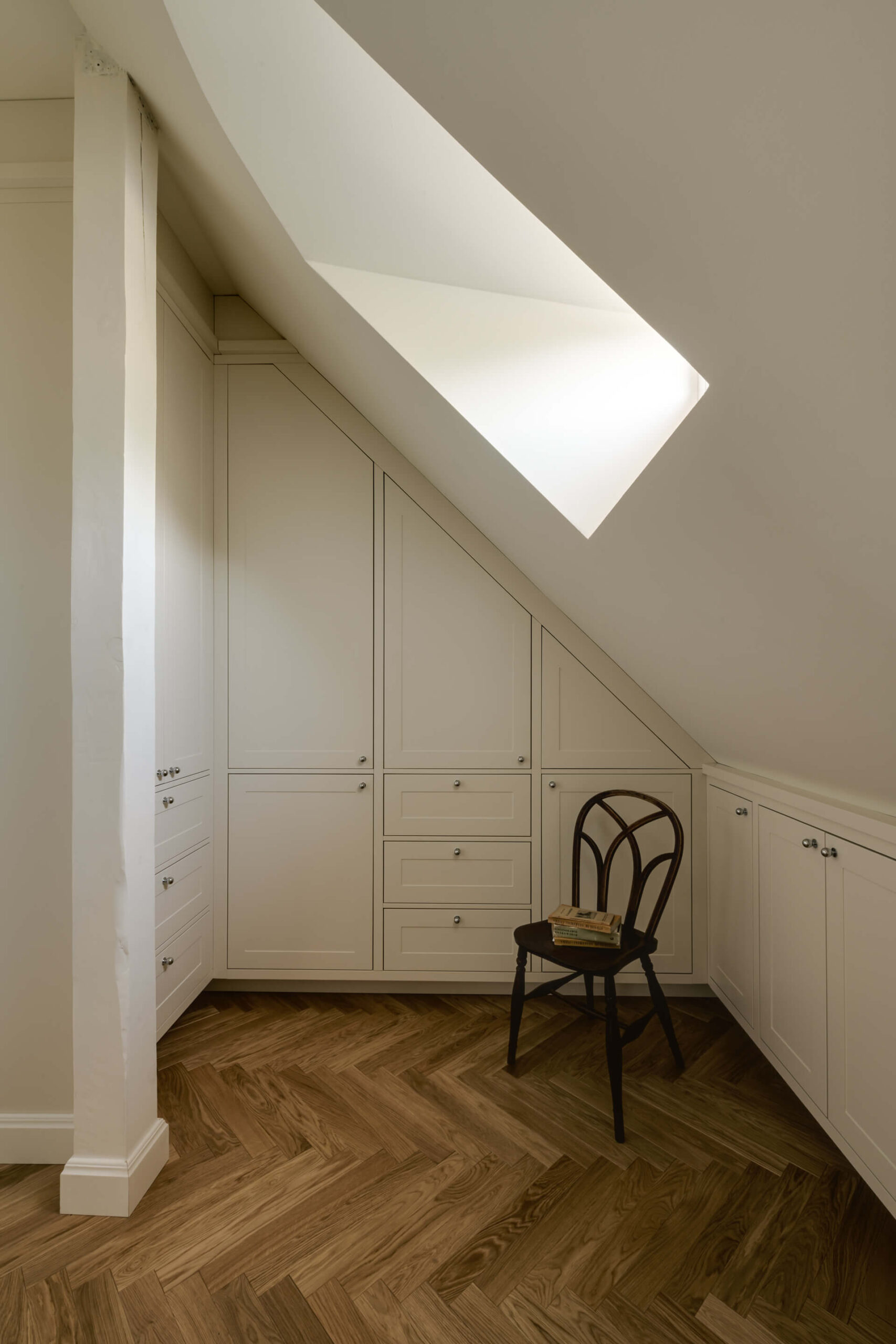
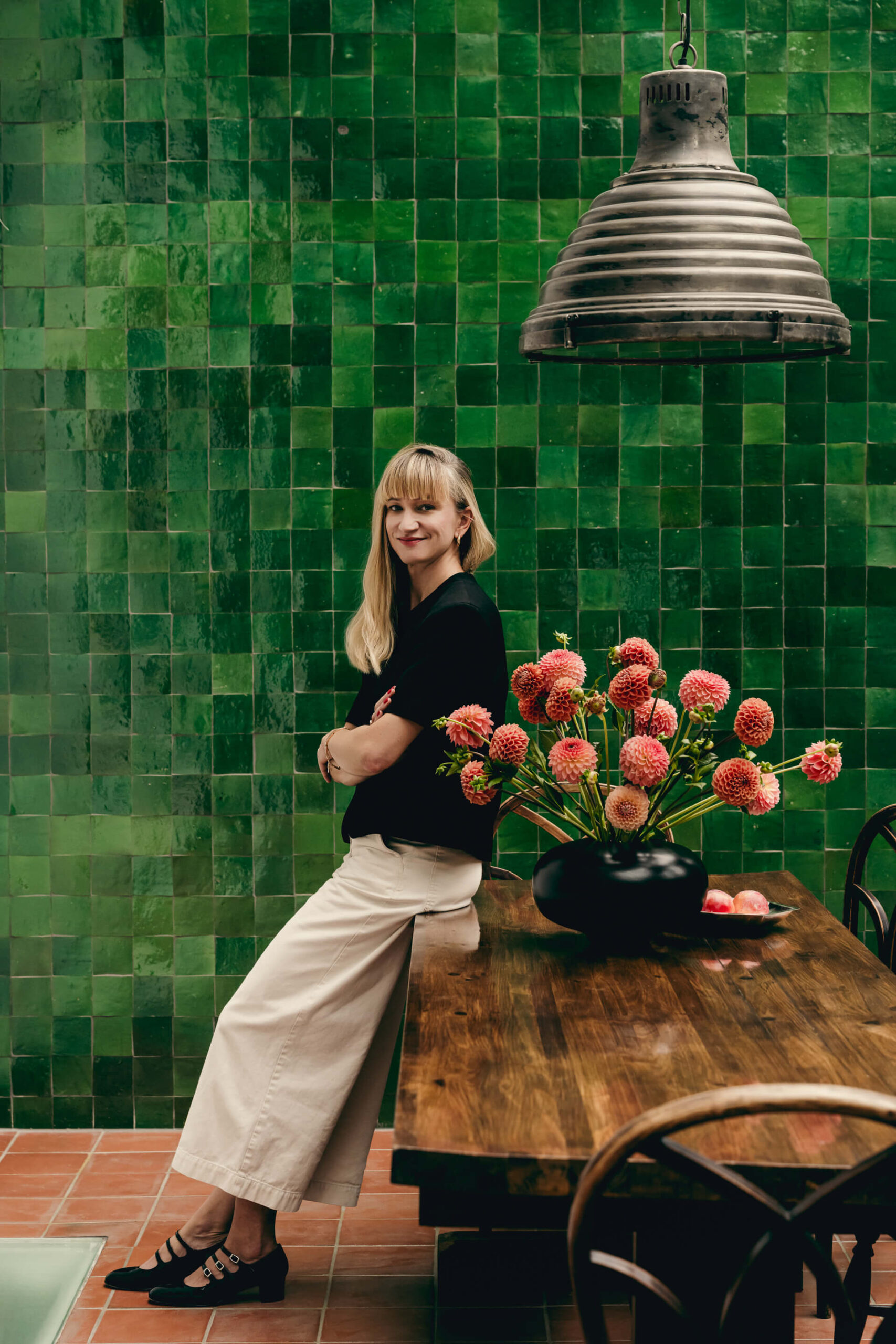
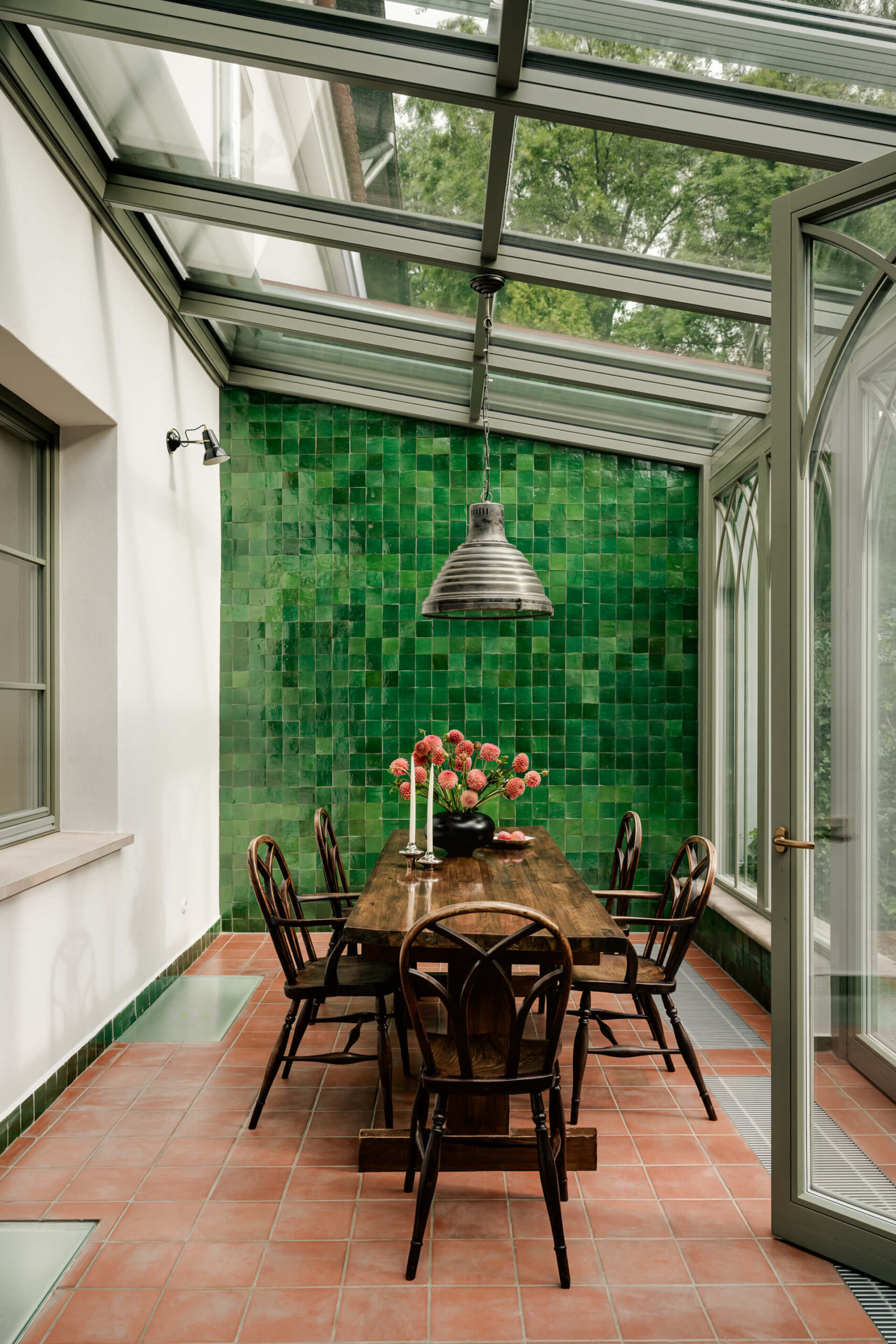
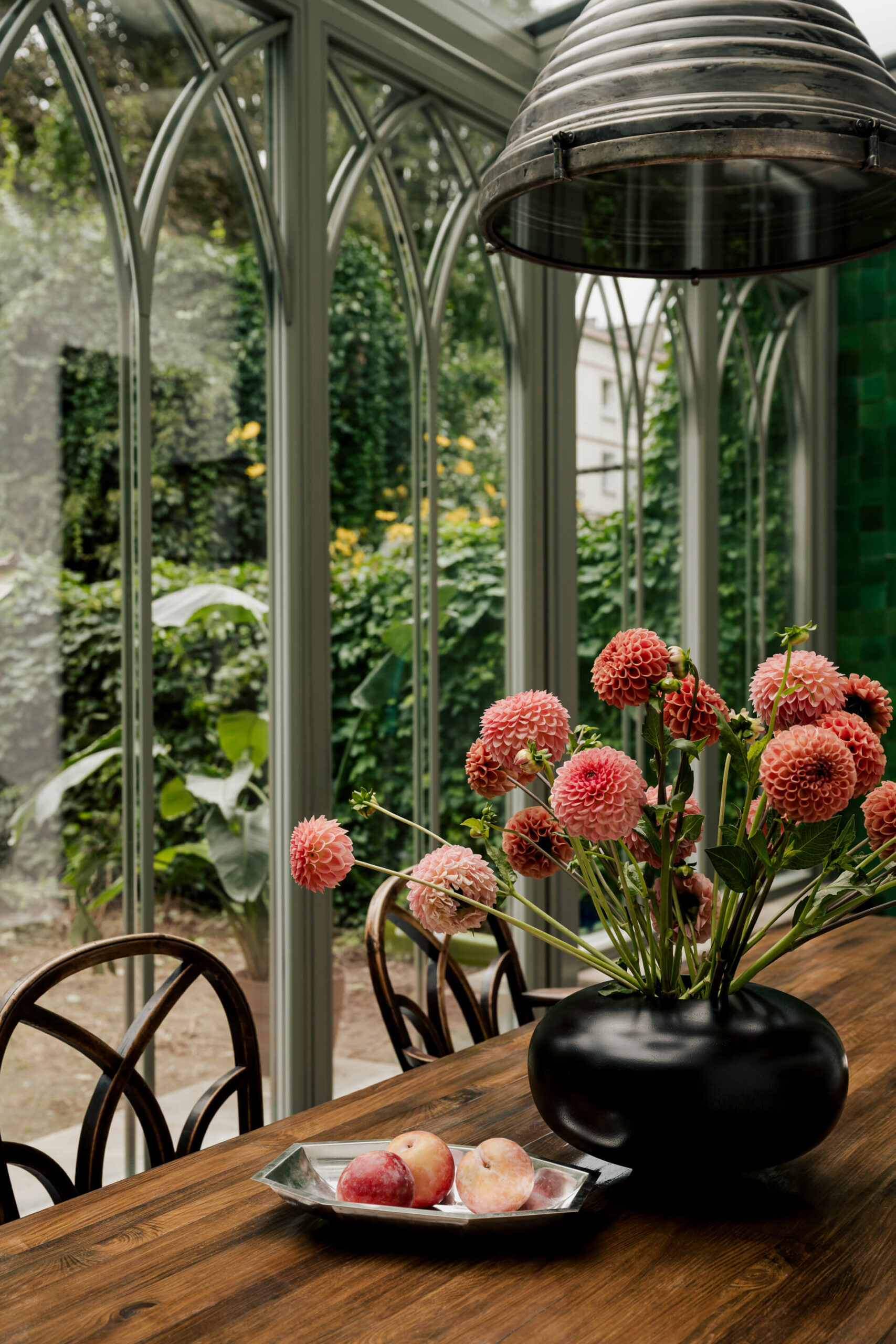
Beyond the window, there is a conservatory where deep bottle-green walls are paired with warm orange cotto terracotta flooring.
English interiors often serve as a response to a climate where sunlight is scarce and days are frequently overcast. Their aesthetic is rooted in the Victorian tradition, where ornamentation symbolized prosperity and cultural refinement. At the same time, the British Empire, through its colonies, introduced inspirations such as Chinese decorative patterns and vibrant Indian motifs into art and interior design.
An important element shaping the identity of British interiors was the Arts and Crafts movement, which drew from nature and emphasized the value of craftsmanship, repetition, and ornament. As a result, English interiors become deeply personal spaces — ones in which residents are unafraid of richness and a sense of controlled chaos, and where individuality plays a central role.
This is the effect we successfully achieved in our Żoliborz project.